
In the curriculum of our Allegra Free School, where Waldorf pedagogy plays a significant role, school celebrations are important events. They are not merely recreational activities, but rather embody a deeper meaning related to values and behaviors inherent to humankind, values that have always existed and that different societies have assimilated, internalized, and represented in various ways, always maintaining their essence throughout history.
Bearing this in mind, Waldorf pedagogy embraces these celebrations and the fundamental value of each one, what they represent for the individual and their environment, and materializes it in a celebration in which teachers, students and family participate.
At this time of year, the upcoming celebration is that of the white dove. During this celebration, we focus on both personal and collective/community aspects. We say "work" because pausing to reflect, to become aware… requires a certain effort, especially from adults, who live each day at a frantic pace. For children, this effort is practically nonexistent, as they live in the realm of emotion and experience, not abstract thought, and they quickly integrate everything they experience.
The first value that the White Dove festival promotes is the search for individuality, for our own path. Today, this need to find ourselves is at the heart of disciplines like mindfulness and meditation, which we turn to because we feel something is missing, that we are unable to identify our true desires, feelings, longings, fears, strengths…
If emptying our minds of noise helps us, imagine how beneficial it is for children when we help them connect with themselves. We achieve this connection by minimizing explanations, setting aside our abstract "wordiness," and allowing them to discover, experience, and learn for themselves what that experience meant.
As parents, it seems logical that we want to tell our children many things, thinking that we are helping them understand what is happening. But the reality is that young children, especially those in early childhood,live in the moment, in the here and now, so it is especially difficult for them to understand what all that information means. They require a lot of time to digest and process it, time they don't spend drawing their own conclusions from their own experiences.
That's why there's been so much talk lately about the benefits of children being bored (or adults, it's perfectly applicable). Boredom isn't a bad thing; quite the contrary, it's necessary to reach that void of activity to bring out what's inside us and make room for creativity. From that boredom, and the calm it brings, we can delve deeper into our individuality.
And this connection leads us to the second value present in the celebration of the white dove. Only through self-knowledge, understanding, and acceptance can we be generous with others. We're talking about authentic generosity, about giving from the heart, not because of what others will say, or because we feel obligated to, or because we hope to please them.
Although it may sound cliché and utopian, it remains true that generosity is one of the keys to achieving a better society, and in a way, as human beings, we strive for it. We don't like to live in an environment where others are mistreated or belittled; we like joy, kind words, the ability to solve someone's problem or to receive help in solving ours—all manifestations of generosity, of sincere sharing.
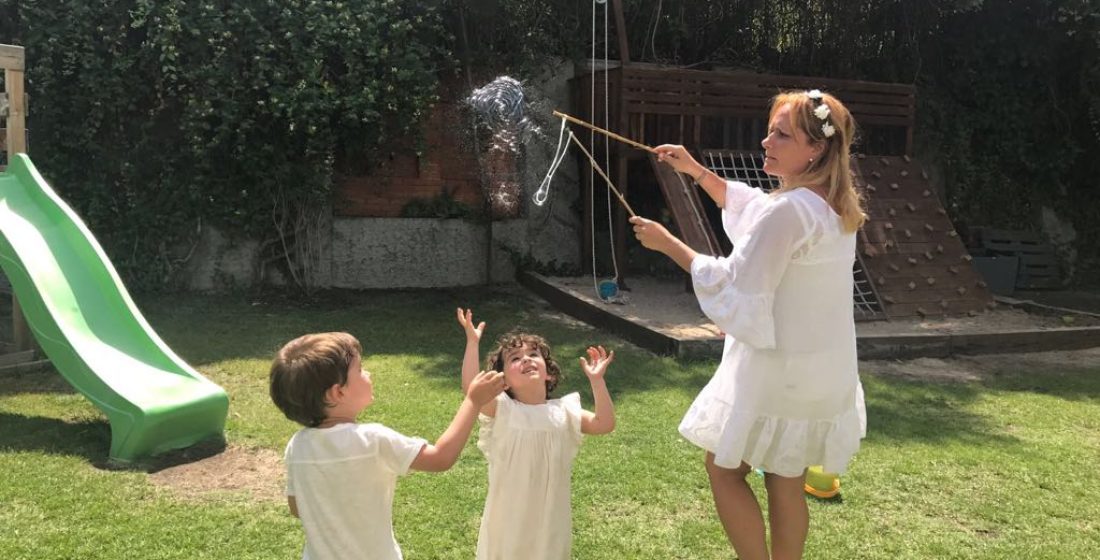
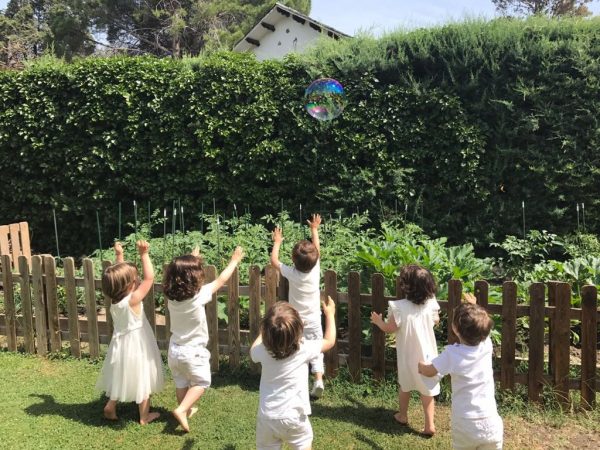
At our Allegra Free School, we celebrate White Dove Day with great joy,the joy of a group of people and children who enjoy each other's company. We all come dressed in white, each bringing a white flower to make a shared bouquet, and a white food or drink from home, which we share and enjoy together at breakfast time. And afterwards, we play in the garden with giant soap bubbles—we love them!