
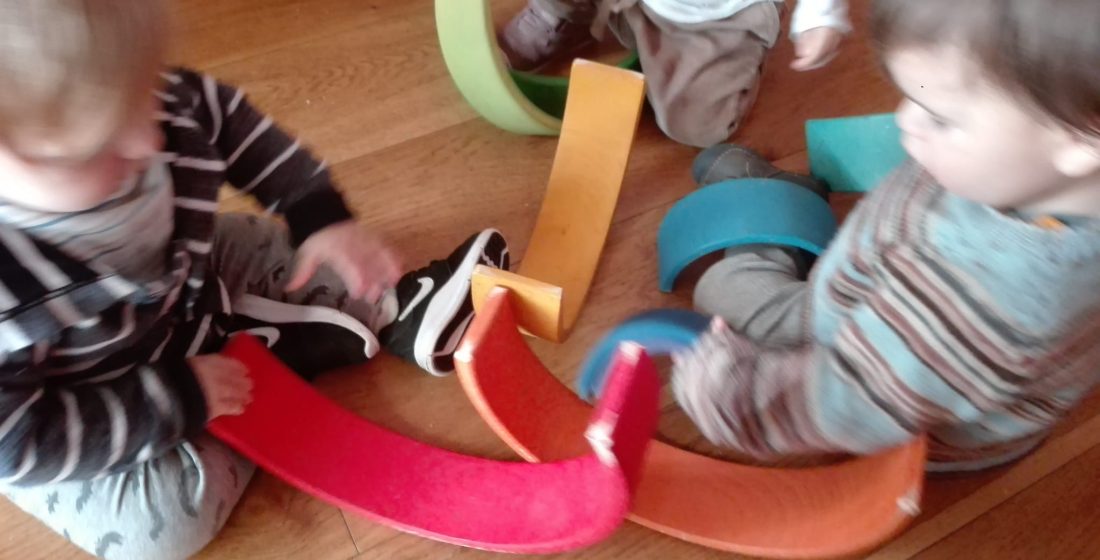
El juego es la base del aprendizaje y del desarrollo integral durante la etapa 0-6 años. Jugar significa desarrollar habilidades motoras, explorar el entorno, desarrollo emocional, integrar el mundo que le rodea, relacionarse con los demás… Jugar es vivir.
Debido a la importancia que tienen los juguetes en la vida de un niño, a la hora de elegirlos es necesario tener en cuenta diversos aspectos.
Los juguetes sin función específica dejan espacio a la creatividad
En primer lugar, es importante que no sean estructurados ni estereotipados, es decir, juguetes que no tengan ya una función específica debido a sus características. Los niños necesitan jugar con materiales que dejen libre su imaginación y su creatividad, que dependiendo de la necesidad que tenga el niño en cada momento el mismo juguete puede ser un avión, un perro o un árbol, el niño decide qué es y qué utilidad darle. Si le damos un juguete muy definido por mucho que el niño imagine el juguete no da pie a que pueda ser cualquier otra cosa.
También es importante observar cuál es el material de los juguetes, si lo que predomina es el plástico estamos privando al niño de un desarrollo sensorial completo; el plástico siempre tiene las mismas o muy similares cualidades en cuanto a textura y temperatura.
Si, por el contrario, los materiales son variados, tipo lana, madera, algodón, seda y otros materiales naturales, estamos dando la oportunidad de experimentar un amplio abanico de sensaciones que guardan relación con su desarrollo sensorial.
Por otro lado, muchas veces los adultos buscamos una utilidad cognitiva en el juguete, por ejemplo, juguetes que ayuden a trabajar la motricidad fina, juguetes encajables para trabajar la lógica, puzzles de animales para que ya vayan diferenciando los animales, etc. Este tipo de juguetes no pertenecen a estas edades, no son necesarios para niños y niñas tan pequeños, e incluso nos atreveríamos a decir que son perjudiciales.
Los niños aprenden a partir de las vivencias naturales, de imitar y de explorar el mundo; cuando les damos juguetes de este tipo no estamos educando en libertad, sino que estamos adoctrinando su cerebro y por lo tanto su aprendizaje. No es culpa de las madres y los padres que este tipo de juguetes estén en la mayoría de las casas, sino que el propio mercado nos lleva a ello, son cánones que están inmersos en la sociedad y de los que es difícil apartarse, especialmente si no sabes que no son buenas opciones para el desarrollo.
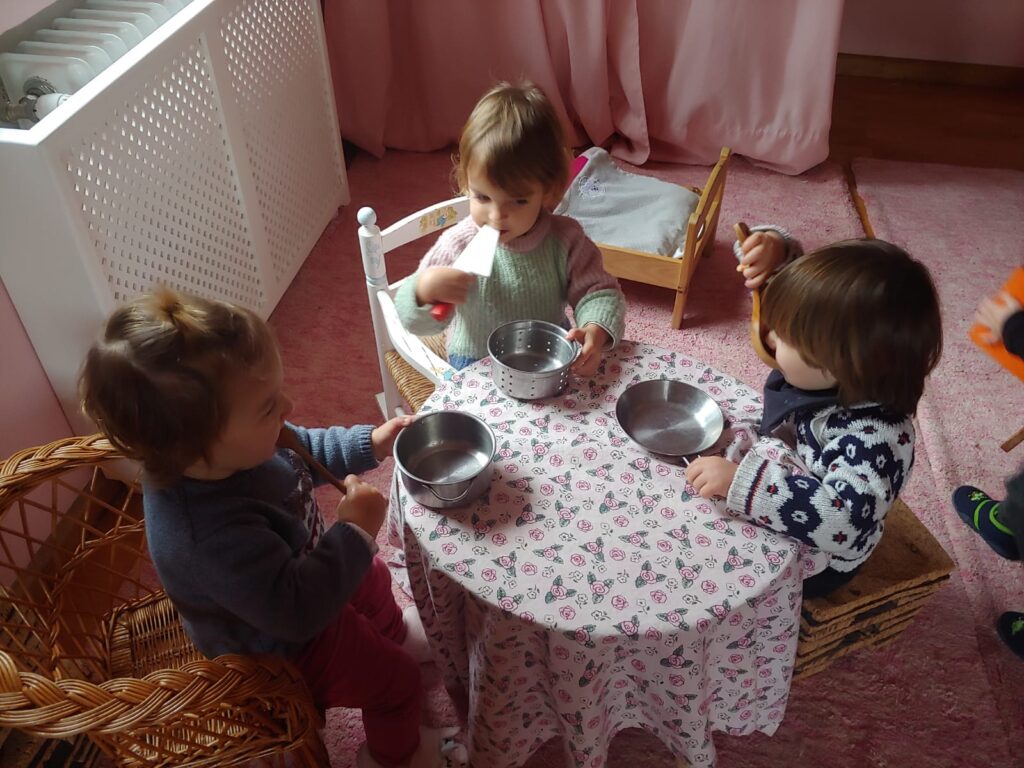
Cómo elegir juguetes para 0 a 6 años
En la infancia, el juego es real, cada vivencia se siente de forma muy veraz, por eso es tan importante ofrecerles objetos bonitos que inviten al cuidado, al calor, a la protección… El juego también forma parte de su relación con el mundo, les ayuda a integrarlo. Por todos estos motivos, nuestra recomendación acerca de juguetes para esta etapa es la siguiente:
- Cestas de mimbre con diferentes materiales naturales y que estén a su alcance. Por ejemplo, una cesta con piñas de diferentes tamaños, otra cesta con piedras de diversas formas, otra cesta con troncos de madera que podéis coger en el campo (también los encontraréis en determinadas jugueterías).
- Otro material importante son las telas, que pueden ser de diferentes tamaños y colores e incluso texturas. Lo mejor son las telas de seda y las de algodón. Que sean variadas para les permitan diversos juegos como hacer cabañas, ponerlas de capas, esconderse debajo, etc. Las telas de colores bonitos llamarán más su atención, de modo que si podemos tener una gama como la del arcoíris será más interesante.
- También es importante, independientemente de que sea niño o niña, que tengan un muñeco en una cunita o camita y que esta esté a su altura. Nuestra recomendación es que el muñeco no sea de plástico y que no tenga la expresión de la cara muy definida. Los muñecos de trapo son más agradables al tacto y permiten una mayor acomodación con el niño como si se tratase de un bebé real. Si la expresión de la cara no es muy marcada ayudará al niño a poder imaginarse diferentes emociones: puede estar llorando, enfadado, riendo, etc. según el juego de cada momento.
- Los muñecos de animales son un recurso muy común en estas edades; nuestra recomendación es que los animales sean sencillos y que transmitan una belleza real. En diversas tiendas podréis encontrar animales tejidos a mano que transmiten la cualidad de cada animal de una forma muy natural. No es importante la cantidad sino la calidad, al estar hechos a mano y con tejidos naturales transmiten de una forma bonita las cualidades del reino animal. Esto hará que el niño interactúe de otro modo con ellos.
- Las pelotas de lana o de fieltro son de los juguetes preferidos de los niños de 1-2 años. Son pelotas no muy grandes que ellos pueden coger fácilmente y que les permite diversos juegos que principalmente fomentan su motricidad gruesa.
- Los coches de madera también suelen llamar su atención y los podéis encontrar de diferentes tamaños y colores.
- Si hay suficientemente espacio en casa, el mobiliario Pikler es muy interesante para esta etapa. Los más destacados son la tabla curva, el triángulo y el arco. Cualquiera de ellos ayudará a su desarrollo motor de una forma libre y al desarrollo de su imaginación; por ejemplo, el arco o el triángulo, con una tela por encima se convierte en una cabaña o también puede ser un puente.
Estos son algunos de los juguetes básicos en estas edades, hay muchos otros también relacionados con la pedagogía Waldorf, como el arcoíris, juegos de construcción, el árbol musical… Como son muchos y no podemos hablar de todos ellos, os animamos a que nos preguntéis dejando un comentario a través de nuestras redes sociales: Facebook o Instagram.
Para encontrar este tipo de juguetes os dejamos una referencia de tiendas: Veobio, Navara, Kanikas, Alupé y Loralora.
Y también os dejamos otros dos post de nuestro blog, en este podéis ampliar información sobre juguetes y en este otro, ideas para crear espacios de juego en casa.