
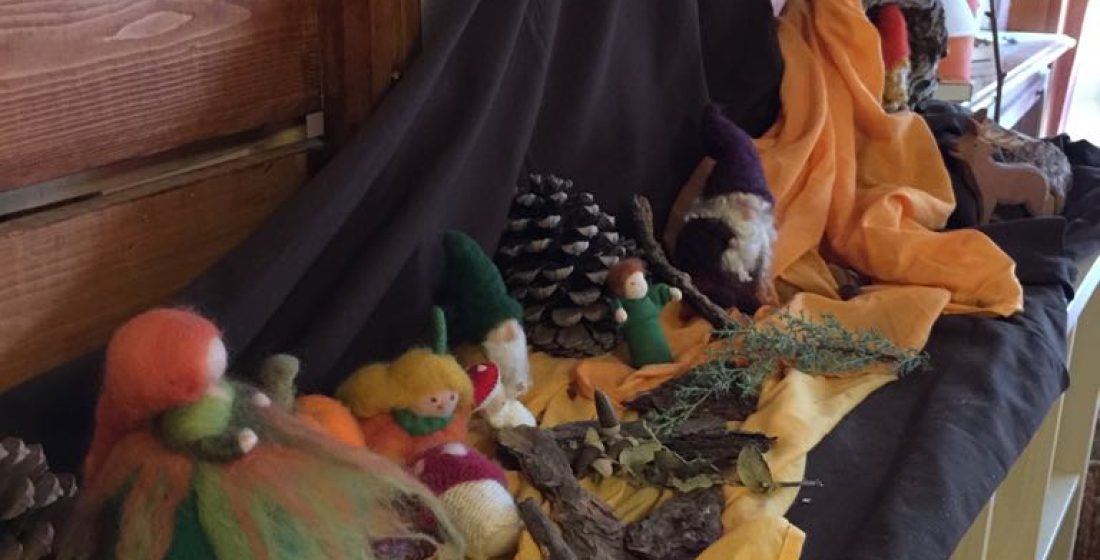
La mesa de estación es un espacio que podemos crear en casa fácilmente. Aunque parezca un elemento sencillo, cumple una función muy interesante: es el lugar en el que ponemos de manifiesto el paso del tiempo, el transcurso de las estaciones y los diferentes elementos que forman parte de este devenir. Cuando los niños son pequeños, no tienen noción temporal, no saben identificar (o les cuesta mucho) en qué momento nos encontramos y por qué vemos ciertos colores, flores o determinada luz en el campo o el parque.
Podemos darles explicaciones verbales de todo tipo, pero los niños no integran lo verbal a esta temprana edad; además, no queremos que aprendan por imposición/obligación, a base de machacar conceptos. Es más interesante, humano, adecuado, mágico y con mejor resultado que los niños vivan sus propias experiencias: desde ellas, el aprendizaje es real, auténtico y propio de cada uno. Por lo tanto, en la mesa de estación también se recogen sentimientos de cada persona que participa en ella, así que el resultado puede ser un “diario” de experiencias de la época.
Si los niños colaboran en crearla, les damos también otra oportunidad de fomentar el sentimiento de pertenencia que tanto buscan a esta edad: cada paseo por el bosque, por el campo, tendrá un recuerdo en casa, en un lugar especial que todos respetamos como algo digno. Es un trocito de lo vivido y, por tanto, de lo posteriormente reconocido.
Una mesa de estación puede hacerse en un ladito de la estantería del comedor, en su mesita de noche, en una balda de su cuarto… Es necesario es que el lugar donde se ponga no sea de uso, pues entonces será poco práctico para el día a día, ya que la idea es poder crear una especie de “bodegón” con piedras, conchas, castañas, flores o troncos que sirvan para esconder pequeños duendes y enanitos de tela, grandes ramas que muestren el estado de la naturaleza….
Los elementos que forman parte de la mesa de estación tampoco requieren una composición concreta. Los únicos aspectos que debemos tener en cuenta es que estén en concordancia con el momento que queremos representar y que sean lo más naturales posible: telas de algodón o seda, juguetes de madera, fieltro o lana, frutos, flores naturales…
A continuación, os dejamos algunas ideas para cada estación.
Otoño: amarillos y rojos. Podemos reflejar la época de la cosecha desde final del verano con espigas de trigo, molinos, calabazas, hojas caídas de los árboles, castañas, avellanas…
Invierno: azul oscuro, que representa la oscuridad, la bóveda celeste nocturna, rojo y blanco. Podemos poner algodón blanco simulando la nieve, un Belén, una corona de adviento… También podemos colocar al rey invierno y enanitos de invierno, semillas de césped o ramas sin brotar.
Primavera: las gamas de verdes simbolizan el despertar de la tierra. Podemos poner flores, huevos de colores (mira aquí cómo decorarlos) y liebrecitas de fieltro o lana cardada.
Verano: predominan los verdes y azules intensos, que representan el mar y se pueden acompañar con flores variadas, conchas de la playa, palomitas de tela, arena, enanitos del jardín, abejas de cera, pajarillos con sus nidos…